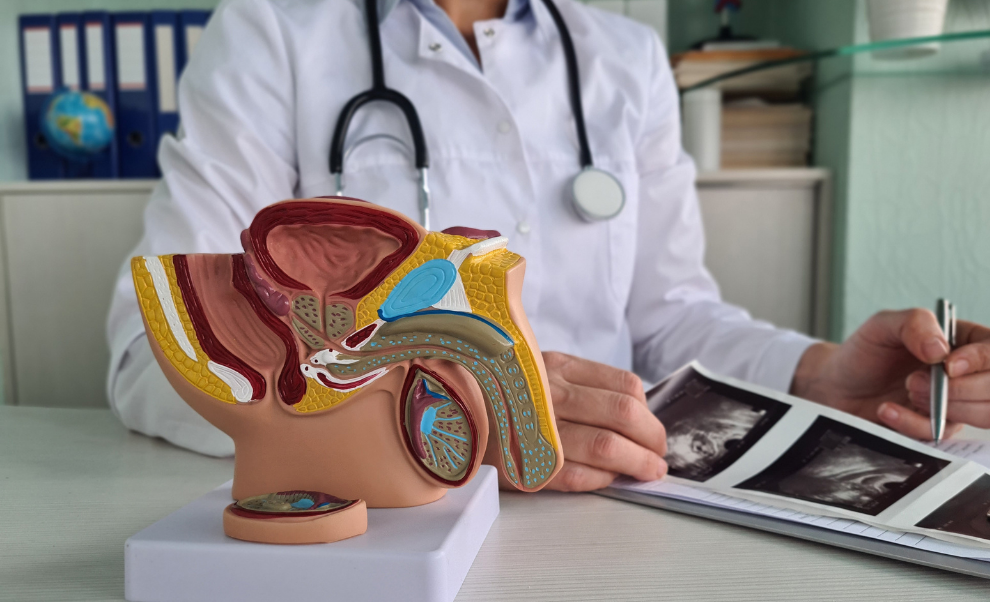
A Penile Doppler Ultrasound Assessment is a specialised diagnostic procedure used to assess the blood flow into and out of the penis. This assessment is a widely utilised clinical tool for evaluating potential vascular factors contributing to Erectile Dysfunction (ED). It assists our urological team in identifying if ED is associated with reduced arterial inflow or veno-occlusive dysfunction (the inability of the erectile tissue to retain blood).
A tiny injection (prostaglandin) is administered to stimulate blood flow, mimicking the natural process.
High-frequency sound waves are used to generate real-time images of the penile arteries and veins.
The flow velocity and volume of blood entering and leaving the corpora cavernosa are precisely measured.
Provides objective data to diagnose arterial insufficiency or veno-occlusive disease, guiding subsequent treatment planning.
At Kalix, we utilise Penile Doppler Ultrasound to provide objective data regarding vascular health. Our specialists rely on this diagnostic assessment to move beyond symptomatic observation, allowing for a more informed clinical pathway tailored to the specific vascular parameters identified.
We rely on this test to provide objective, measurable data that confirms the exact vascular mechanism of your ED.

The results directly inform the next steps, whether it’s identifying suitability for penile rehabilitation, medication, or definitive surgical intervention (like a penile implant).
By accurately diagnosing the root cause immediately, we minimise wasted time on treatments unlikely to succeed, accelerating your path to functional recovery.

Kalix works with a network of trusted specialists across surgery, medicine, and allied health. Every clinician within the Kalix ecosystem is selected for their depth of expertise in their field.
The procedure involves a small injection to induce the erection, which is generally well-tolerated. Most patients either don’t feel the injection or report that it feels like plucking out a hair.
The assessment typically takes between 30 to 60 minutes, including preparation time, the study and discussion of results immediately afterwards.
This advanced diagnostic is performed or directly supervised by our specialised Urologists or highly trained technicians in our clinics.

Start with your concern. Kalix will guide the rest.