
Weight loss medication has made significant and sustained weight reduction achievable for people who had not been able to get there on diet and exercise alone. What it has not changed is that losing weight quickly affects a great deal more than body weight, and the difference between a good outcome and a poor one usually comes down to what is being monitored along the way.
Kalix treats weight management as a metabolic and endocrine problem rather than a prescribing one. Programs are led by dual-trained endocrinology specialists alongside dietetic and allied health support, with body composition, bloods and hormonal health tracked throughout the program rather than reviewed at the end of it.
Access to weight loss medication is no longer the difficult part. It can be obtained through a telehealth consultation in an afternoon, often without examination, blood tests or any assessment of what is driving the weight gain in the first place.
What that approach cannot do is manage what happens next. Weight comes off at whatever rate the medication produces rather than a rate the body can absorb, muscle is lost alongside fat, deficiencies go uncorrected, and the hormonal picture that may have contributed to the problem is never investigated. The weight is lost. A good deal else is lost with it.
Reduced intake combined with reduced absorption produces deficiencies that show up as fatigue, poor wound healing, and brittle hair and nails. We test before treatment begins and correct as they appear rather than once they become symptomatic.
Fat tissue is endocrinologically active, and losing it rapidly alters hormonal signalling throughout the body. For some patients the hormonal picture was contributing to the weight gain to begin with.
Rapid weight reduction is associated with reduced bone mineral density. This compounds in post-menopausal women, who are already losing bone for unrelated reasons, and it does not reverse the way fat loss does.
Weight lost without adequate protein intake and resistance training is not all fat. Muscle lost alongside it lowers resting metabolic rate, makes regain more likely, and leaves patients lighter but weaker.
Rapid weight loss is a recognised trigger for telogen effluvium, where a large proportion of follicles enter the resting phase at once. Shedding appears two to three months after the trigger, so patients rarely connect the two.
The face draws on the same fat reserves as the rest of the body. As the deep and superficial fat compartments deflate, the midface flattens and descends.
Where skin loses the elasticity to retract, loose skin follows across the face, abdomen, arms and thighs. How much depends heavily on the rate of loss, which is one of the variables a supervised program actually controls.
Prevention is always the better option, and most of these problems can be avoided by managing the rate of loss properly from the beginning. Where a patient arrives after the fact, or where changes have happened despite good management, there is a pathway for each of them within the Kalix network rather than a referral to work out on your own.
Collagen stimulators prompt the skin to produce its own collagen over a period of months, which suits a generalised loss of facial fullness. Volumising agents restore structural volume directly and predictably, and suit specific areas of deflation such as the temples, midface and tear trough.
Where the dominant problem is descent rather than lost volume, filler will not correct it and attempting to do so produces a heavy, overfilled result. A deep plane facelift repositions the deeper structural layer of the face rather than tightening skin.
Where skin across the abdomen, arms or thighs has lost the elasticity to retract, body contouring surgery is the definitive answer.
Weight-loss-related shedding is usually self-limiting, but recovery can be supported and accelerated. Oral minoxidil and platelet-rich plasma injected into the hairline are both used to stimulate follicular activity.
Protein targets and a resistance training protocol are set as part of the program rather than suggested alongside it, and lean mass is tracked at each body composition assessment so losses are caught early.
Monitored throughout the program with intervention where indicated, and with particular attention for post-menopausal patients.
Both of these are common, and both are routinely missed when weight is treated in isolation from the endocrine picture behind it.
Changing oestrogen levels alter fat distribution, bone density and the body’s response to weight loss itself. A program that does not account for this tends to produce slower results, greater bone loss, and a pattern of fat redistribution that frustrates patients who are doing everything asked of them.
Low testosterone and excess weight drive one another. Fat tissue converts testosterone to oestrogen, lower testosterone makes fat easier to gain and muscle harder to hold, and treating either in isolation usually disappoints.
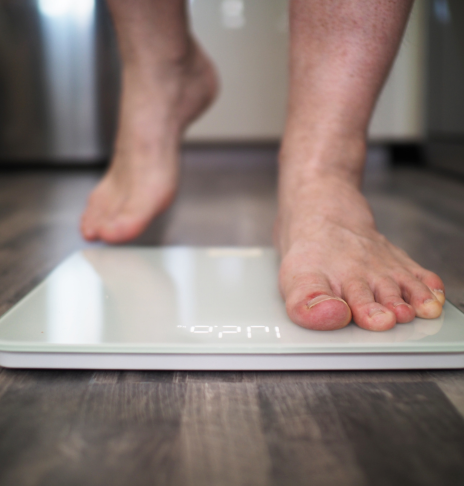
Some lean mass is lost in any significant weight reduction. How much depends on the rate of loss, protein intake and whether resistance training is part of the program. Body composition assessment is what makes the distinction visible, which is why it is tracked throughout rather than assumed at the end.
Faster is not better. A rate the body can accommodate protects muscle, bone and appearance, and produces a result more likely to hold. Your target rate is set at the first consultation based on your starting point and your metabolic profile.
A referral is not required to book, though one may allow a Medicare rebate to apply. We also ask that certain blood tests are arranged through your GP before the first consultation.
Where skin has retained enough elasticity it will retract over time. Where it has not, there are both non-surgical and surgical options, and we will refer you within the Kalix network rather than leave you to find someone.
It can, particularly with rapid loss and in patients over forty. Managing the rate of loss is the most effective prevention. Where volume has already been lost, collagen stimulators and volumising agents can restore it.
No. These programs are medical rather than surgical. For some patients surgery is the more appropriate option, and we will say so and refer accordingly.
That is common, and it is often the point at which patients come to us. We will assess where you are now, including what has been lost from muscle and bone as well as fat, and build the program from there.
Kalix works with a network of trusted specialists across surgery, medicine, and allied health. Every clinician within the Kalix ecosystem is selected for their depth of expertise in their field.

Start with your concern. Kalix will guide the rest.